


The boundary between philosophy and design
Following the line from Plato’s Forms to the iPod, and what it reveals about where great design actually begins.
The Bauhaus: birth of a new ethos
All form begins in formlessness — And so, design’s most resonant work has always lived in the same place: the bridge between pure thought and lived experience. Weimar Germany, 1919 — From the wreckage of World War I, a radical institution emerged to test that theory: the Bauhaus.
Founded by architect Walter Gropius, it sought to unify abstract thought with tangible creation, collapsing the divisions between artist and craftsman.
The school’s manifesto declared a singular goal: “The construction of the future, comprising everything in one form — architecture, sculpture, and painting”.
This convergence of disciplines was not simply aesthetic — it was philosophical.
Central to the Bauhaus was a pedagogy rooted in introspection, abstraction, and experimental learning; its workshops weren’t just about mastery of material, but about discovering the essence of ‘things’.
Key figures & Unique Approach
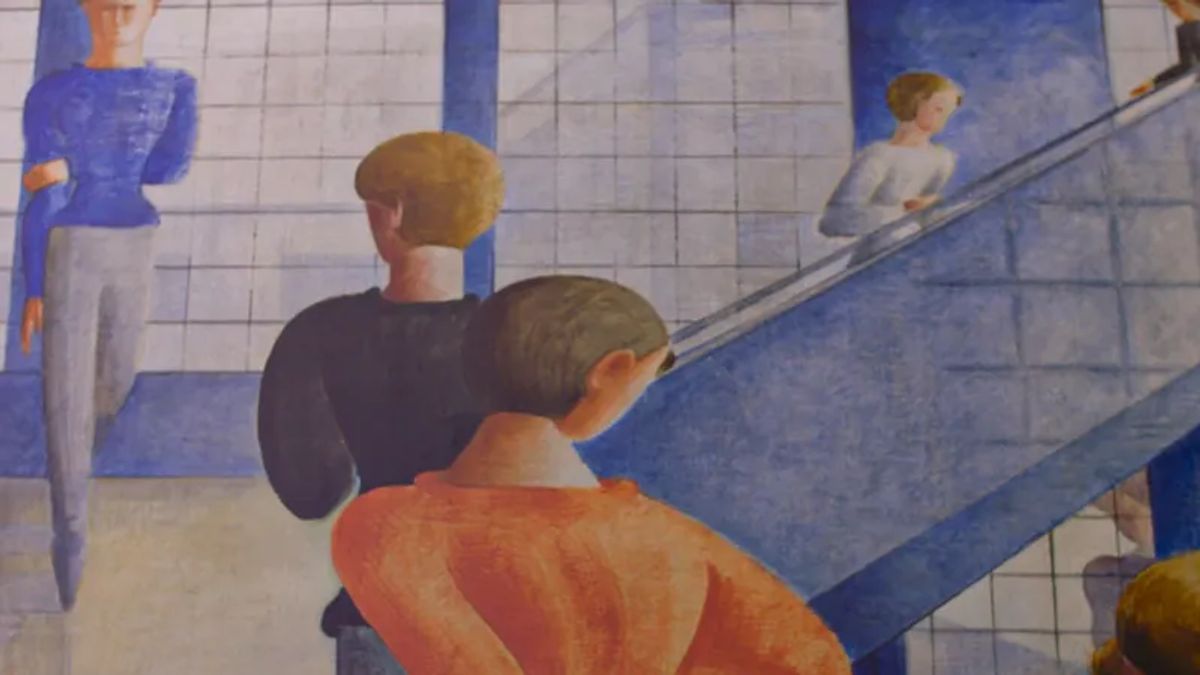
A few years after its founding, the Bauhaus school saw its staff grow to include controversially avant-garde masters such as Kandinsky and Klee, who were key figures in the exploration of expressing conceptual ideas and spirituality through abstract forms.
This idea of abstraction had been popularised through the introduction of the artist’s ‘Inner Necessity’ by Kandinsky in 1910, a revolutionary idea which bled through into his teachings at Bauhaus, notably in his ‘Form Analysis’ classes, where students dissected visual elements into their purest structure .
Other masters such as Klee had their impact through development of personal visual languages in symbolic forms and motifs that would express immaterial concepts like ‘Growth’ and ‘Dynamism’, reminiscent of the logic of Platonic Forms — “Art does not reproduce the visible,” Klee wrote, “it makes visible”.
This instinct is beyond artistic, it is philosophical. To make the invisible visible, is to transform work from concept into form — from pure thought to material reality. It’s the same movement that Plato described when he proposed that abstract Forms precede their physical instances, and the same movement Kant outlined when he argued that our sense of beauty finds itself grounded in concepts that exist before any object does.
Core Philosophy & Political Rebuttal
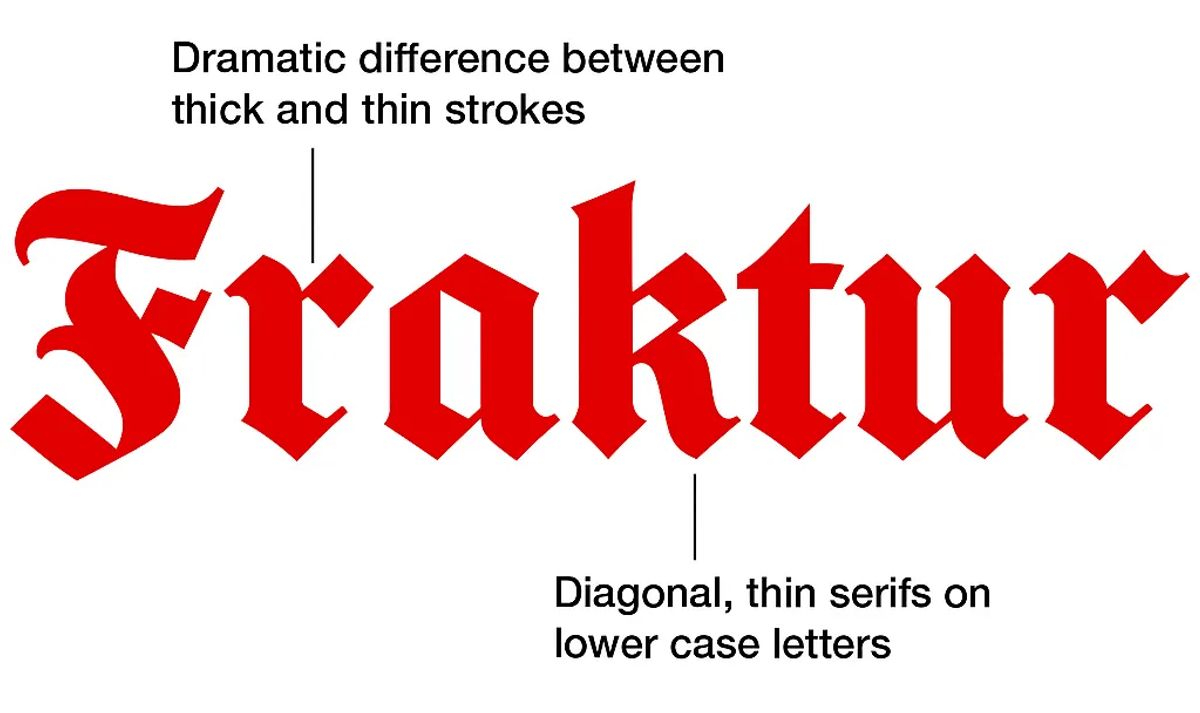
The school’s intention to construct the future through comprising all within a single form did not go unchallenged — As Nazism rose, the school’s ethical momentum saw a direct counter within nationalist purism, carried forward by the symbolic design of Fraktur.
Oskar Schlemmer, a Bauhaus master of the time, framed the school as a “Rallying point for all those who, with faith in the future and willingness to storm the heavens, wish to build the cathedral of socialism” — An ideology that disgusted the proclaimed ‘purism’ of Nazi Germany, a regime that feared the school’s embrace of the strange, the foreign & the surreal.
Although the Nazi Regime ultimately pressed down, forcing the doors to the Bauhaus to close in 1933, the radical ideology had already found itself with enough fuel to stand as a revolutionary socio-political & philosophical beacon that would outlive its founder’s lifetime.
Today, its fingerprints are found in everything from the minimalism of IKEA, to Apple’s devotion to simplicity. But for us to understand why the Bauhaus left such a mark, we have to look further back — Back to the philosophical traditions it was, knowingly or unknowingly, drawing from.
Great thinkers: pure thoughts and invisible blueprints
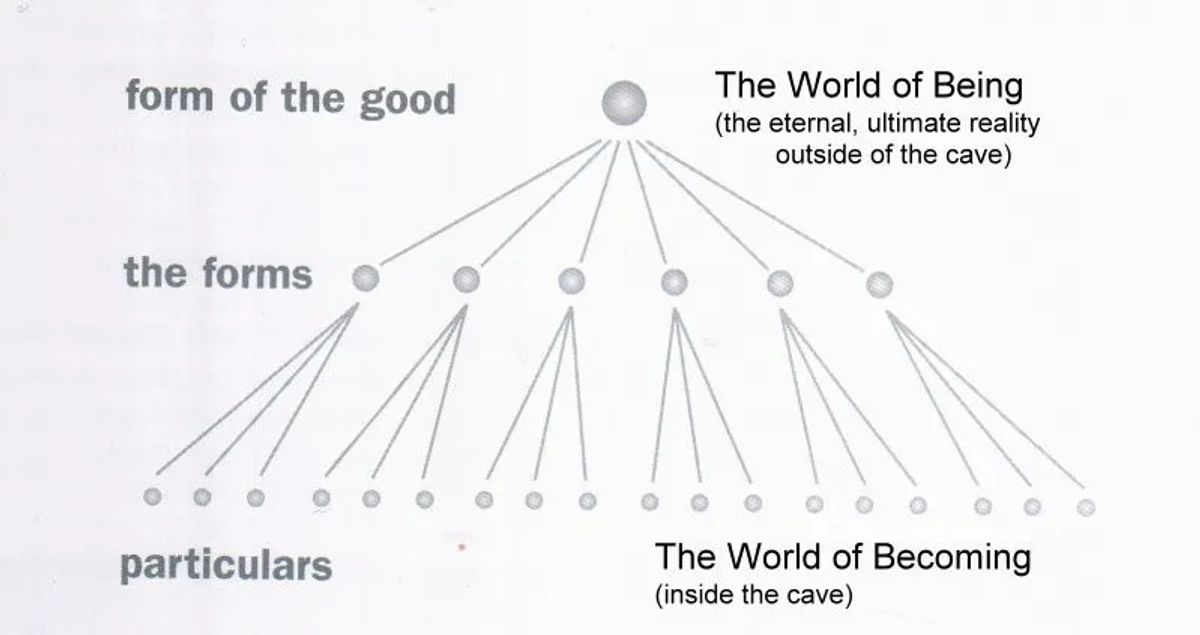
In philosophy, ‘Pure Thought’ describes a mode of reasoning completely detached from sensory experience or practical constraint — Reasoning from first principles alone. It’s precisely this mode that the Bauhaus applied to the world of Design.
Pure thought has shaped design movements across history precisely because it offers something the material world cannot — A space to reason about form, purpose, and meaning, before the constraints of the practical and physical world can play their part.
For example,‘Form follows function’ — the defining principle of modernist design — has its roots in utilitarian philosophy’s pursuit of idealised, unornamented form. The mental model of the perfect object existed prior to material, and so Pure Thought shaped the aesthetic before the aesthetic had a shape.
Origins of Pure Thought
Pure thought traces back further than modernist philosophies, through to ancient Greece and the Platonic tradition, where the realm of endless ‘forms’ more real than their physical components was proposed by Plato.
This conception of abstract archetypes echoes through centuries of design and aesthetic philosophy, deepened considerably by Immanuel Kant. In his Critique of Judgement (1790), Kant drew a distinction that speaks directly to design practice: free beauty versus dependent beauty.
“Free Beauty” is judged on form alone — a pattern, a flower, an abstract composition — with no concept of what the thing is supposed to be. “Dependent Beauty” instead is judged against purpose — a chair is beautiful or not relative to what a chair is meant to do. We cannot separate its form from its function and still judge it fairly. This is, in essence, the philosophical root beneath “form follows function.” A building, a tool, an interface — these can never claim free beauty. They are always judged as dependent beauty, against the concept of what they are for.
Martin Heidegger pushed this conversation further, shifting from what things are to how we experience them — phenomenologically, as he put it in “Being and Time” and later in “Poetry, Language, Thought”.
His example was a tool: a hammer is not experienced as an object with properties, but as something we hammer with. It recedes into the action it enables. Only when it breaks, or fails, or behaves unexpectedly does it snap back into visibility as a “thing”.
This is, perhaps, the truest test of good design; the best interfaces, objects, and spaces are the ones we stop noticing, because they have become extensions of intention rather than objects of attention. We only see design when it fails us.
"The less we just stare at the hammer, and the more we seize hold of it and use it, the more primordial does our relationship to it become." - Heidegger, Being and Time
Strengths & Limitations of Pure Conceptualism
Yet philosophy alone is not enough; the over-reliance on pure concepts carries its own risk, just as the over-reliance on pure materialism does. Minimalism, taken to its logical extreme, embodies simplicity, efficiency, and logic; Pushed too far, and it becomes cold, optimising for an idea of the object rather than for the person who has to live with it, and without that corrective pressure of lived, human experience, it positions objects with logical coherence, but absent humanity.
Adrian Forty documented this in ‘Objects of Desire’, tracing how the visual language of modernism carried philosophical and ideological assumptions that practitioners rarely named.
This is the real argument of this essay: the most resonant design does not live in pure thought, nor in raw material reality. It lives in the bridge between them — where the idealised Form meets the friction of actual use, and is corrected by it.
Philosophy gives design its first shape, lived experience gives it its final one.
Relation of Philosophical Ideas to Tangible Design Elements
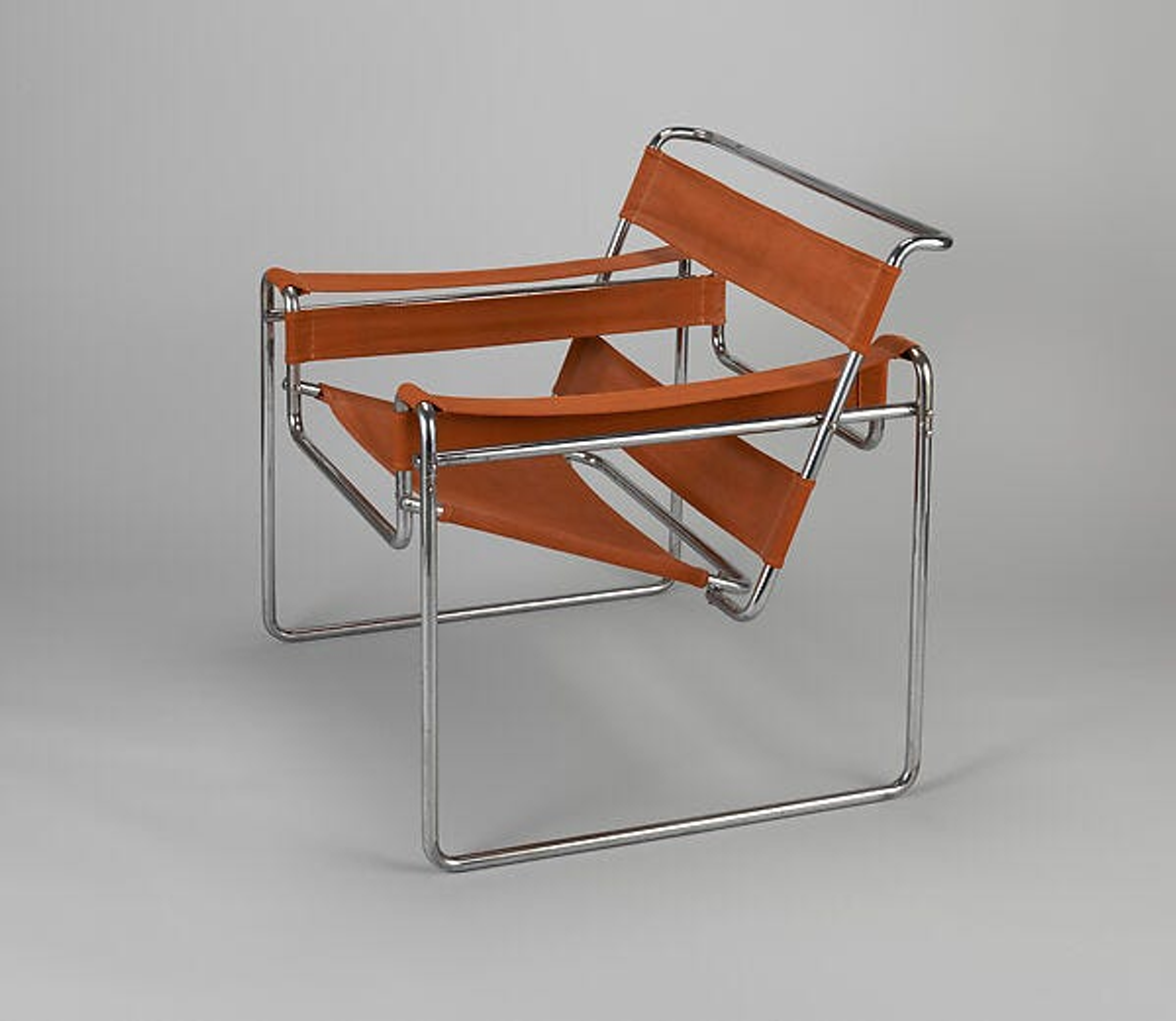
These ideas were not abstractions confined to seminar rooms; they shaped objects we can still buy today.
Marcel Breuer’s Wassily Chair is Platonic geometry made physical — tubular steel bent into pure lines, the chair reduced to its essential form, stripped of anything that does not serve its function.
Marianne Brandt & Hin Bredendieck ‘Kandem Lamp’ shows Kant’s dependent beauty in action: a sphere, a cylinder, a disc, assembled with no ornament — beautiful because it is exactly and only what a lamp needs to be.
These were not aesthetic choices made at the end of a process; they were philosophical positions taken at the beginning of one — proof that pure thought, given time and discipline, produces objects the world keeps.
Corridor of Thought: The Noumenal Playground
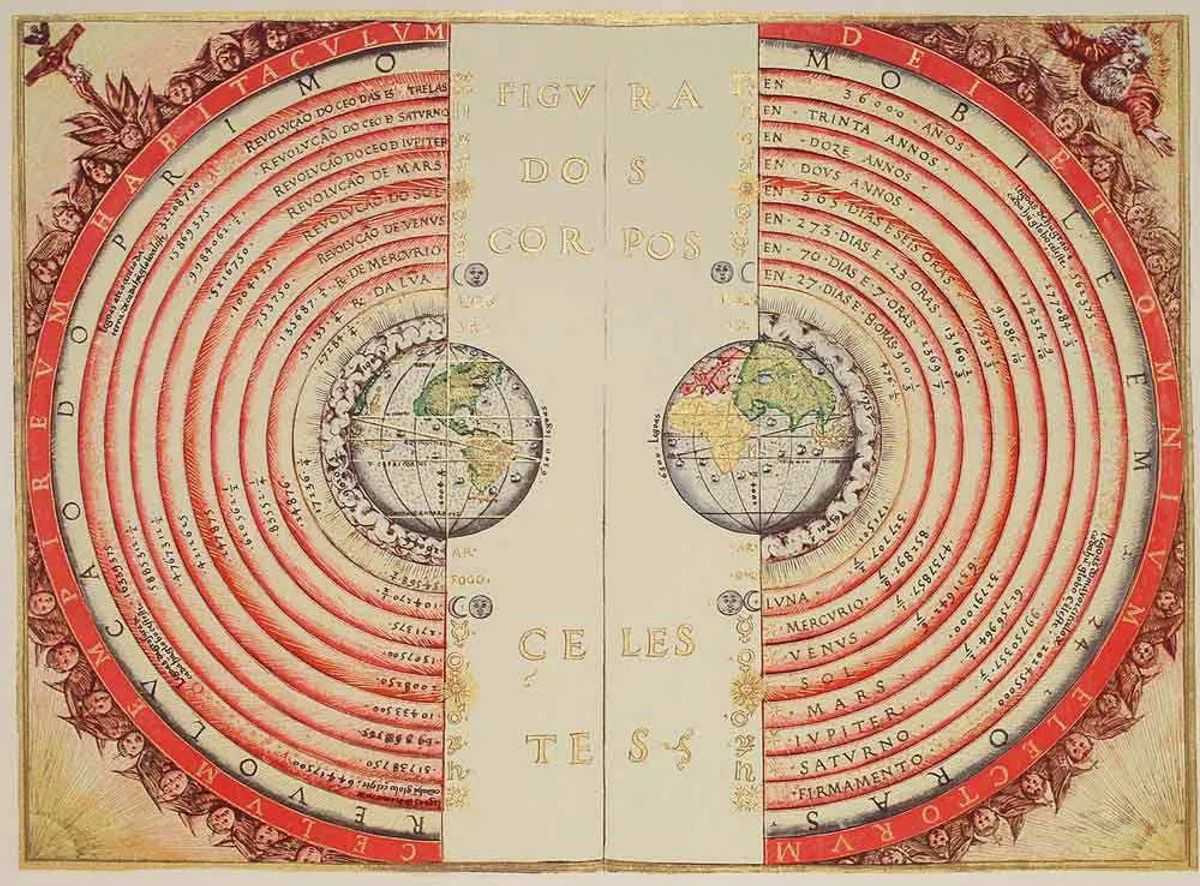
Every designer has been there: staring at a blank page, running a simulation in their head that no material constraint has yet touched. A chair that exists nowhere, or an interface no one has seen.
This is the noumenal playground — the conceptual space Kant described as existing beyond sensory experience, where ideas take shape before they take form.
For Kant, the noumenal world was the realm of things as they are in themselves, beyond perception. For the designer, it is something more immediate: the only place where a truly new idea can exist before the world gets hold of it. Not as a philosophical abstraction, but as design has always operated; moving from an imagined solution backward toward the problem, testing, iterating and refining through mental simulation before anything physical is created.
This is a distinct mode of thinking, one that cannot be compared to scientific reasoning or artistic intuition, and this state was mapped famously by Cross in ‘Designerly Ways of Knowing’, where he identified simulation and abductive reasoning as the defining shape of how designers actually think — All long before any material exists to think “with”.
Thought Experiments
In design, we can treat this noumenal world as the ‘blank canvas’ for thought experiments, mentally visualising and simulating hypothetical designs entirely detached from practical or physical constraints.
For example, the Bauhaus (who emphasised the exploration of problem solution through abstraction first, material concerns after) could look at the creation of a chair unbound by its ergonomics, materials or contractual limitations, evoking an idea of a chair that symbolises qualities of stability and support — A basis for strong, philosophical design that can evolve into reality.
"Imagination is more important than knowledge. Knowledge is limited, imagination encircles the world." - Einstein
Revealing Truths
Mentally stimulating usage of this imagined chair from various angles enables us to reveal new insights through pure thought, allowing application of conceptual dualisms — Organic vs geometric, ornate vs minimal, symbolic vs functional, and then tweaking various properties to morph not only the form, but purpose as well.
This method mirrors Einstein’s approach to physics; his thought experiments weren’t acts of unconstrained imagination — riding beside a beam of light, he still couldn’t violate the laws of physics.
The constraint was the point, as it forced the insight. The designer’s noumenal playground works the same way: free from material and budget, but never free from purpose, never free from the person who will eventually use what we make. The best thought experiments are disciplined ones.
From Thought to Form: Realising Philosophy in Design
At some stage, the thought experiment must meet the world. Pure reasoning generates the first form, empirical reality sharpens it. The most successful design cycles begin in the noumenal playground and are refined through use, feedback, and iteration.
The Bauhaus understood this rhythm instinctively; their curriculum moved students deliberately between abstraction and making — conceiving a form in pure thought, then testing it in wood, steel, and glass, then returning to the concept with what the material had taught them. Vision and reality in constant conversation.
The Apple iPod
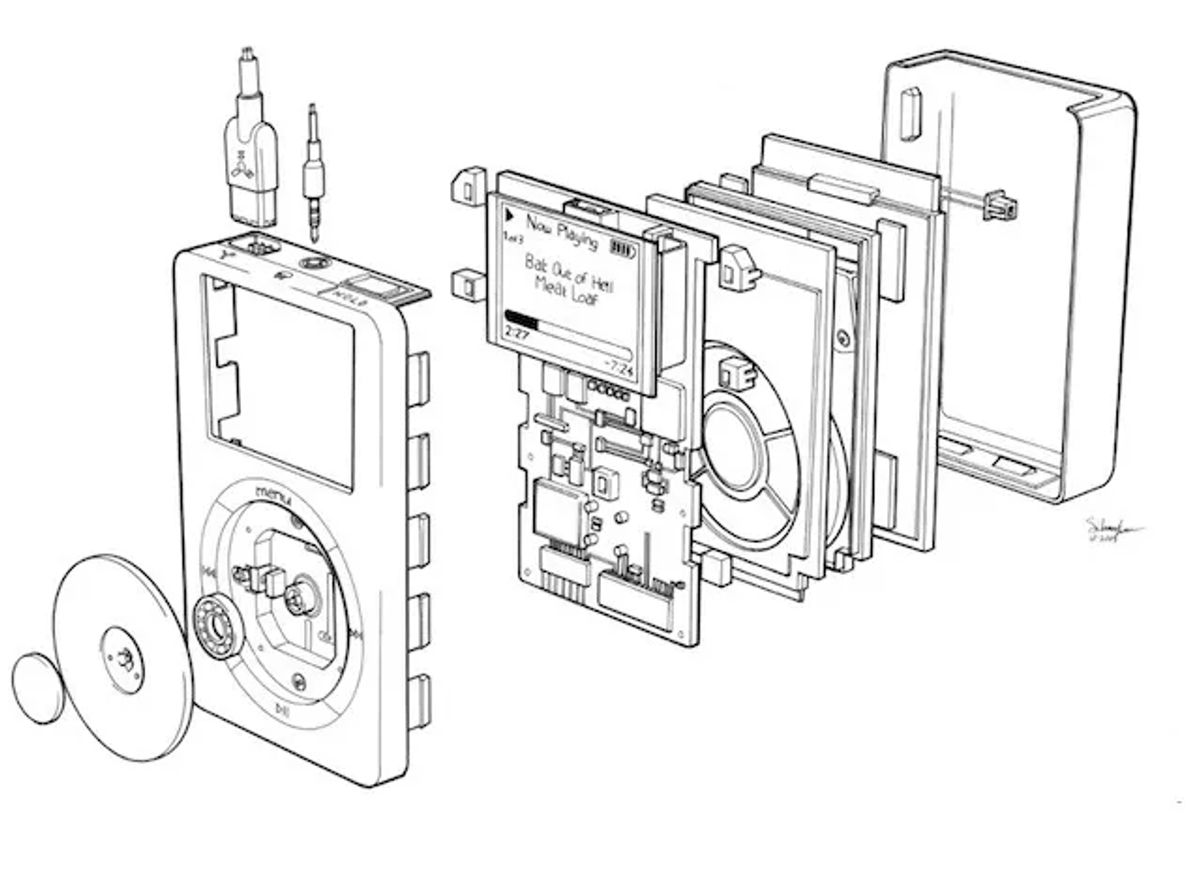
The iPod was not designed from the outside in. Rather, it began as a mental model — a single, declarative idea: one thousand songs in our pockets. This was not a technical specification, nor a manufacturing brief — instead, a pure thought about what music on the go could feel like if every constraint were temporarily suspended.
This approach held lineage predating the iPod within a philosophy that stated conceptual identity must be resolved before any engineering decision is made, that the feeling, cultural & emotional meaning of an object must completely take shape in the mind before it can exist in the physical world — a philosophy documented by Esslinger in ‘A Fine Line’, describing how the Snow White design language built for Apple in the early 1980s came to fruition by creating a complete mental model of what Apple should feel like.
Esslinger called this ‘Form follows emotion’, and the iPod took that philosophy to its conclusion.
From that mental model, every design decision followed. The scroll wheel — conceived before any engineer had solved how to implement it — emerged from the thought experiment of navigating a thousand songs with a single thumb.
The absence of an external power switch was not a cost decision; it was a philosophical one. The object should recede into use. It should feel, in Heidegger’s terms, ready-to-hand — present only as the music it delivers, invisible as a device.
The white, the unbroken surface, the single port — Each of these was a Kantian move; dependent beauty stripped to its most essential form, judged entirely against the purpose of delivering music with minimum friction. Nothing ornamental, nothing that did not serve the idea.
It was a Bauhaus echo in silicon, a tangible result of pure thought — minimalist in form, maximalist in clarity. The mental model came first, the object followed.
It changed an industry not because it was the most technically sophisticated device of its time, but because the idea behind it was cleaner than anything the material world had yet produced.
"True simplicity is derived from so much more than just the absence of clutter and ornamentation - it's about bringing order to complexity." - Jony Ive
Prompting Philosophy in our Process
Philosophy does not give designers answers — It gives them better questions. And if the arguments of this essay hold, there are four worth carrying into every project:
What is the essence of this creation?
What Platonic form underlies its function?
How would Kant judge its beauty — freely, or against its purpose?
And what would Heidegger say about its use — does it recede into action, or does it demand attention?
In Closing: A Reflective Mirror for Designers

Gropius knew it when he collapsed the boundary between artist and craftsman. Klee knew it when he made the invisible visible. Kant knew it when he asked what beauty owes to purpose. And Heidegger knew it when he reminded us that we only truly see an object when it fails us.
What each of them understood, in their own way, was the same movement: from concept to form, from abstraction to object, from the idea that exists nowhere to the thing that exists in the world. Every designed object, Buchanan argued in ‘Wicked Problems in Design Thinking’, is a rhetorical proposition — a claim about how the world should be.
Design thinking is not a subset of science or art but an integrative act, translating pure intention into lived reality. The movement from formlessness to form is not a problem to be solved or a step to be skipped; it is the work.
All form begins in formlessness.
"There is no essential difference between the artist and the craftsman." - Walter Gropius
References
Primary Philosophical Sources:
Plato — The Republic (~375 BC), Theory of Forms
Immanuel Kant — Critique of Judgement (1790), Kant’s Aesthetics and Teleology
Martin Heidegger — Being and Time (1927), Poetry, Language, Thought (Originally 1950 — Language Speaks)
Kandinsky — Concerning the Spiritual in Art (1912)
Design Theory & History:
Richard Buchanan — Wicked Problems in Design Thinking (1992), 1992 Newsletter Analysis
Nigel Cross — Designerly Ways of Knowing (1982), ResearchGate Overview
Adrian Forty — Objects of Desire: Design and Society Since 1750 (1986)
Wikipedia — Form Follows Function
Practitioners & Primary Accounts:
Hartmut Esslinger — A Fine Line (2009), Snow White Design Language, Biography
Jony Ive — On simplicity and design process, WWDC 2013
Bauhaus Primary Sources:
Walter Gropius — Bauhaus Manifesto and Program (1919)
Paul Klee — Creative Credo (1920)
Oskar Schlemmer — Diaries (Ed. Tut Schlemmer, 1990)
Design Objects & Case Studies:
Marcel Breuer — Wassily Chair (1925)
Marianne Brandt & Hin Bredendieck — Kandem Lamp (1928–1929)
Apple — iPod, First Generation (2001)


