


User experience design has, for most of its existence as a named discipline, operated in a landscape that changed faster than the practitioners within it could fully adapt.
The pace of that change, far from stabilising, is increasing; Moore's Law has been contested as a precise predictor but its underlying observation - that computing capability grows exponentially - continues to hold in the broader sense, and the design questions that emerge at each stage of that growth are genuinely novel rather than simply variations on what came before.
The future of UX is not a single story but several simultaneous ones, unfolding at different speeds across different domains.
What follows is an account of the most consequential of those trajectories - not predictions, but directions.
The proliferation of UX
The discipline of user experience design is, by the standards of most professions, extraordinarily young.
Its founding moment is sometimes traced to 1950, when the psychologist John E. Karlin was hired to work on the touch tone keypad design for the telephone - one of the first deliberate, research-driven attempts to make a piece of technology easier to use. At that time, perhaps ten people globally could reasonably be described as UX professionals.
By 2022, that figure stood at approximately 2 million. By 2050, Nielsen Norman Group - the foremost research institution in the field - projected it will reach 100 million.
The growth is not simply a story of demand for a fashionable skill; it is a story of an idea achieving maturity. As UX practitioners have become more numerous, the standard of experience across industries has risen; as it has risen, users have become more demanding; as users have become more demanding, investment in experience design has increased.
The discipline is in a feedback loop of its own making, and it is accelerating.
Augmented, virtual, and spatial realities
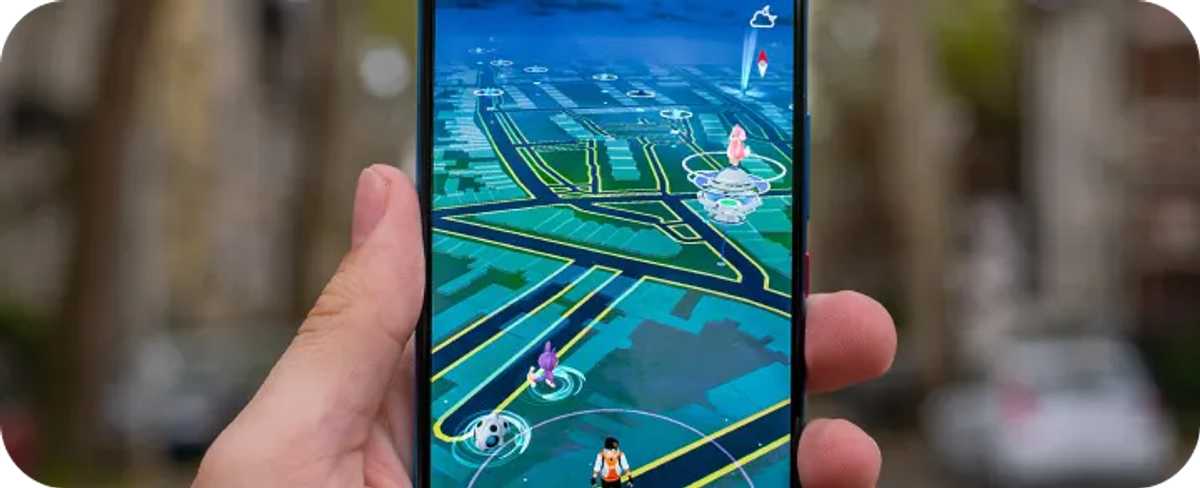
Spatial design - the design of experiences that blend digital content with physical space, or transport users entirely into constructed environments - is no longer a horizon topic.
The hardware has matured substantially since the earliest consumer headsets, and the design challenges it poses are genuinely different from those of screen-based interaction: depth, embodiment, peripheral awareness, and the calibration of sensory input all become live design questions in ways they are not in a two-dimensional interface.
AR, VR, and SR are still in their early stages, which is precisely the point of relevance for the designers working now.
The conventions of these mediums are being established; the affordances are being discovered; the vocabulary of spatial interaction is being built. The designers who engage with these problems now are doing formative work - the equivalent of designing the early interfaces that became the conventions every subsequent designer has inherited.
Artificial intelligence and machine learning
The relationship between AI and UX design has changed substantially in recent years.
What was once an emerging capability - AI able to generate text, images, and simple interactions - is now a core component of the design landscape itself. AI tools are embedded in the design workflow: in research synthesis, in generative exploration, in accessibility checking, in user testing at scale.
At the same time, AI-driven products have become the primary surface on which many UX designers now work - designing conversational interfaces, AI assistants, and recommendation systems that operate through personalisation rather than fixed navigation.
The deeper question for the field is not whether AI will change UX design - it already has - but how the principles underlying good experience design apply to products whose behaviour is inherently dynamic, personalised, and sometimes unpredictable.
That is the genuinely new design problem; the tools are just the context in which it is posed.
Zero UI and voice experience
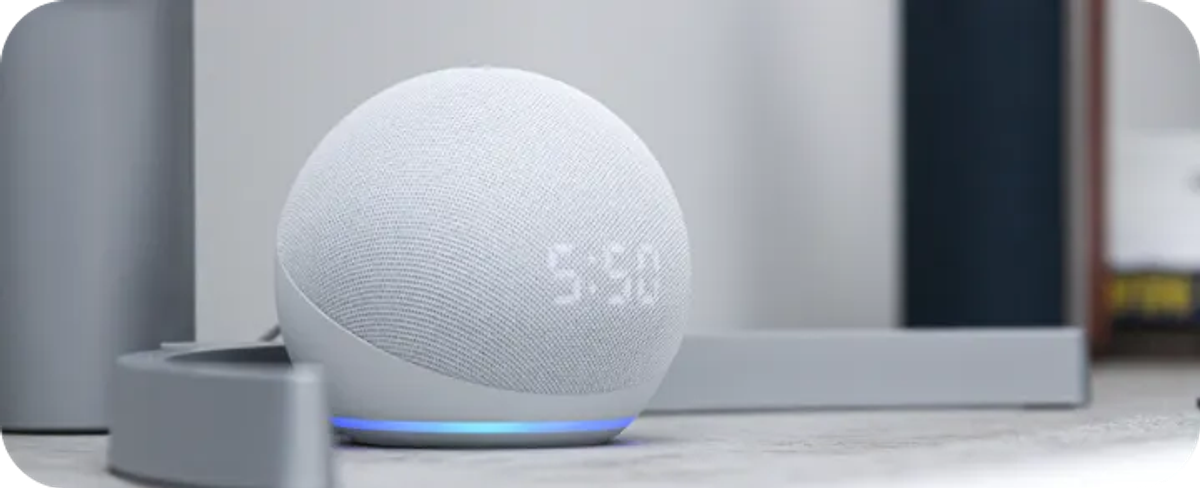
The concept of Zero UI - design that achieves its ends without a visible interface at all, through gesture, voice, ambient awareness, or environmental response - has moved from speculative to established over the past decade.
Voice interfaces in particular have become a standard part of the product landscape; Alexa, Siri, Google Assistant, and their successors are in daily use by hundreds of millions of people, and the experience quality of those interactions has improved substantially from their earliest versions.
What voice and zero UI design makes clear is something that was always true but easier to overlook in screen-based design: that UX is fundamentally about experience, not about visuals.
The task is to design an interaction that feels good, works well, and serves the user's actual needs; the medium is secondary. This understanding - that the craft is experiential rather than visual - is perhaps the most important principle the field can carry into whatever new surfaces the next decade produces.
The horizons of UX design are, by any measure, expanding.
The discipline is larger, more mature, and more consequential than at any previous point in its short history; and the problems it is being asked to solve are more genuinely complex.

For those who are drawn to the craft, this is a good position to be in. There is no shortage of important work to do.


